Did the Stonehenge Altar Stone Ride a Glacier From Scotland?
Tracing an Altar Stone’s Epic Journey
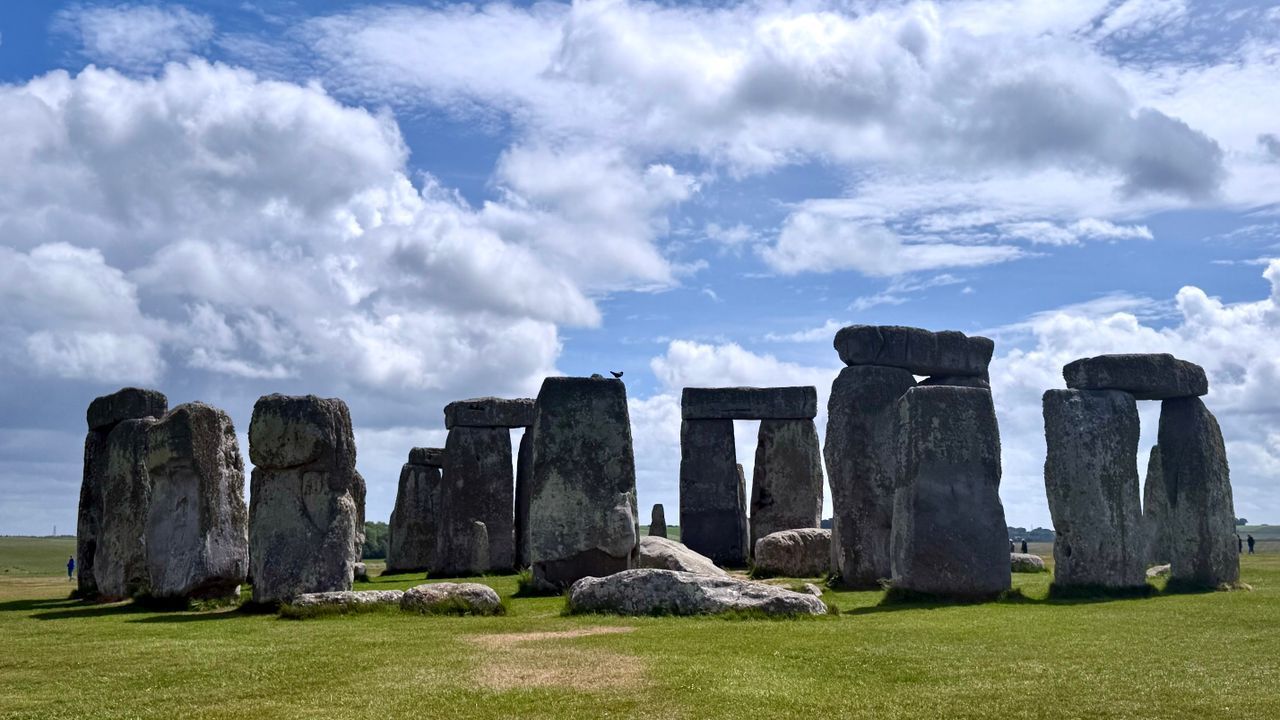
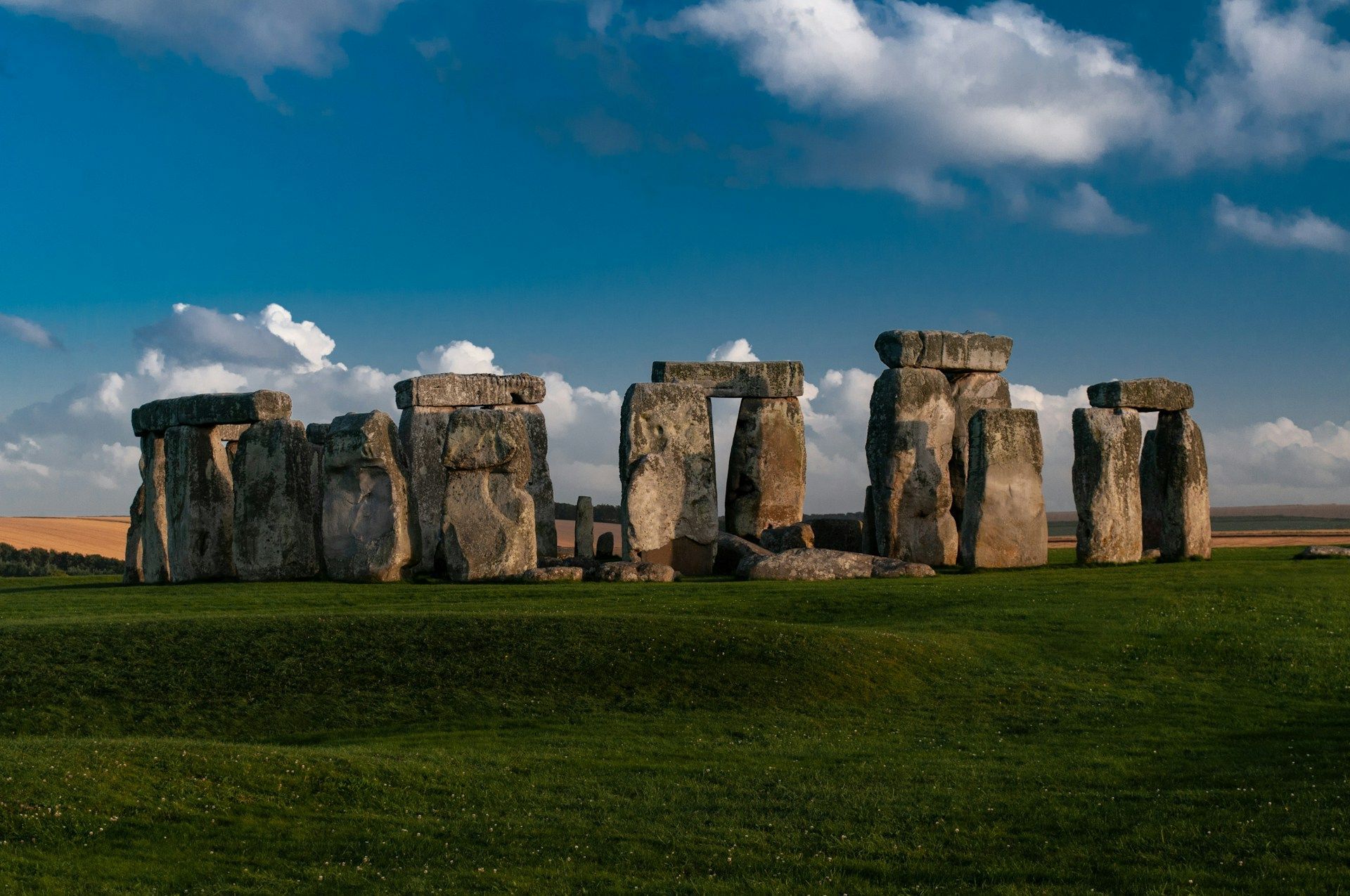
The most famous stones at Stonehenge are the giant sarsen uprights and the mysterious bluestones, but tucked among them is a quieter enigma: the so-called altar stone. This six-tonne slab of sandstone does not match the geology of Salisbury Plain, and that oddity has bothered archaeologists for a long time. If it started life hundreds of miles away in northern Scotland, how did it end up in the middle of southern England?
On our private Stonehenge tours, this is one of the questions guests from the US and Canada most enjoy exploring, because it links a familiar monument to a much bigger story about climate, migration, and human determination. New research from teams at Sheffield Hallam University and Curtin University offers a bold idea: the altar stone may have taken its first long trip not on wooden rollers, but on the back of a glacier, long before Stonehenge was built at all.
From Orcadian Basin to Doggerland a Glacier’s Work
Geologists now believe the altar stone likely began as a block of sandstone in the Orcadian Basin, an area of northern Scotland rich in this kind of rock. That puts its birthplace roughly 435 miles from Salisbury Plain, far beyond the distance most people imagine when they think about how Stonehenge was assembled.
So how could such a heavy stone cover that kind of ground in deep prehistory? During the Ice Age, huge rivers of ice moved slowly across the land. As they flowed, they could:
- Pluck chunks of rock from exposed cliffs
- Grind and polish stones as they dragged them along
- Carry boulders for astonishing distances
- Drop them again as the ice melted and retreated
This process leaves what geologists call glacial erratics, big stones stranded far from their source. The new theory suggests that an Ice Age glacier may have carried the altar stone south from the Orcadian Basin, then dropped it in a very different place from where we see it today.
That place was Doggerland, a lost world that once connected Britain to mainland Europe. Now buried under the North Sea, Doggerland was once a low, fertile plain. According to the research, the glacier could have released the altar stone there, leaving a lone Scottish boulder standing in an open Neolithic landscape. This does not just solve a transport puzzle, it also shifts part of the story from prehistoric engineering to Ice Age climate and natural forces, long before anyone thought about building stone circles.
Ancient Britons Rising Seas and an Audacious Move
After the Ice Age, people settled in Doggerland, hunting, fishing, and eventually farming as the climate warmed. They would have lived with one constant background drama: sea levels slowly rising as the world’s ice sheets melted. What had been dry land began to flood, little by little, until entire communities had to abandon their homes.
Dr. Veness and colleagues suggest that climate change might explain why anyone would take on the seemingly impossible task of shifting a six-tonne stone not once, but twice. In this scenario:
- The altar stone was already significant to people living in Doggerland
- Rising seas threatened to swallow the place where it stood
- Communities chose to move the stone inland to save it from the water
- It was later moved again, finally arriving on Salisbury Plain
As Dr. Veness puts it, the decision to move the stone was “audacious.” You do not haul a six-tonne rock across changing landscapes just for the fun of it. For people to commit to that level of effort, the altar stone must have carried real weight in their spiritual or cultural life. It may have marked a sacred place, linked to ancestors, or held stories and meanings we can only guess at now.
Seen this way, the altar stone becomes part of a wider story of climate-induced migration. Communities on the drowning plains of Doggerland may have been forced to move, carrying with them not just tools and livestock, but a cherished stone that represented who they were. When we talk about environmental change shaping human history, this is that idea made very real, and very heavy.
Rethinking Stonehenge Climate Culture and Meaning
What does all this do to our picture of Stonehenge? Instead of appearing out of nowhere as a finished stone circle, the monument starts to look like the end point of a much longer process that began as people responded to a changing world. The altar stone has not just traveled through space, from northern Scotland to southern England, but through many different phases of human life and belief.
On our private Stonehenge tours, we often encourage guests to see the site as a series of overlapping stories. This theory adds a powerful new layer:
- The altar stone may have been sacred before anyone thought about Stonehenge
- Its location could have shifted as coastlines drowned and people moved
- Building Stonehenge might have been one way of re-centering a displaced community
Popular theories about Stonehenge focus on astronomy, ritual, and burial practices. None of those are cancelled out by this new idea. Instead, climate and migration slide into the picture alongside midwinter sunsets and ancestral rites. It becomes possible that the first impulse to build here was not just about watching the sky, but about creating stability and meaning after losing so much land to the sea.
For visitors, that changes how it feels to stand in the center of the circle. You are not only looking at mysterious stones aligned with the sun, you may be standing where ancient migrants chose to place a stone they refused to surrender to the ocean.
Experiencing the Story on Private Stonehenge Tours
All of this sounds dramatic on the page, but it lands differently when you are actually out on Salisbury Plain, with the wind in your ears and the altar stone in front of you. That is where a knowledgeable local guide can make a real difference. Instead of a quick walk around with a basic audio guide, private Stonehenge tours give you time to unpack these theories in a way that feels personal and grounded.
With a private, experience-led day trip, you can expect:
- Flexible pickup from places like London, Bath, Salisbury, or nearby areas
- Arrival times planned to avoid the busiest crowds where possible
- Space for questions, conversation, and unhurried photos
- Storytelling tailored to what you are most curious about
We find visitors from the US and Canada particularly enjoy linking Stonehenge to other sites that show the impact of ancient seas and ice. In one day, you might pair Stonehenge with:
- Bath, where natural hot springs and Roman engineering meet
- Avebury, another great stone circle set in a village and open fields
- The Cotswolds, with rolling hills shaped over long geological time
- The Jurassic Coast, where cliffs reveal deep marine history in their layers
Seen together, these places help turn the altar stone’s story into something you can trace across different landscapes, rather than a single stop on a tight schedule.
Step Into the Altar Stone’s Journey for Yourself
When you walk through the visitor entrance and first glimpse the stones, it is tempting to focus only on the iconic circle in front of you. Yet if the altar stone really rode a glacier from Scotland, sat for ages in Doggerland, and was then hauled inland as the seas rose, each stone around it starts to feel like part of a much older, wider world. You are not just ticking off a bucket-list sight, you are stepping into a story that began with ice, water, and people trying to hold on to what mattered most.
Private Stonehenge tours are ideal for giving that story the time it deserves, at a relaxed pace and on your own terms. With room for pauses, questions, and simple quiet moments at the stones, the research about glaciers, Doggerland, and climate-driven movement becomes more than an article you once read. It becomes part of the way you remember your day on Salisbury Plain, and part of how you think about the people who built one of the world’s most famous prehistoric sites.
Turn Your Stonehenge Visit Into a Private, Unforgettable Experience
Let Heritage & Stone Tours handle the details so you can focus on experiencing Stonehenge at your own pace. Explore our curated
private Stonehenge tours designed for families, couples, and small groups who want a more personal connection with this ancient site. Tell us your interests, and we will tailor your itinerary and timing for a smooth, stress-free day. If you have questions or special requests before you book, simply
contact us and we will gladly help you plan.
In This Article
Plan Your Day Trip
Tell us what interests you and we'll design the perfect itinerary for your group.
Share
More from the Journal