

Discover Lacock
Wiltshire’s Most Beloved Village
A medieval village where the streets look much as they did two hundred years ago, a 13th-century abbey steeped in extraordinary history, and a landscape so perfectly preserved that film crews have been returning here for decades — Lacock is one of England’s true hidden treasures. Owned almost entirely by the National Trust, this enchanting corner of Wiltshire has stood in for everywhere from Hogwarts to the drawing rooms of Jane Austen. Our private guided tours bring it all to life, beyond what you would ever discover on your own.
Perfectly Preserved Medieval Village
Harry Potter & Pride and Prejudice Filming Location
13th Century Lacock Abbey
Fox Talbot PhotographyMuseum
Iconic National Trust Village
Places to Discover
Lacock Village, The Abbey and Beyond
Why visit Lacock?
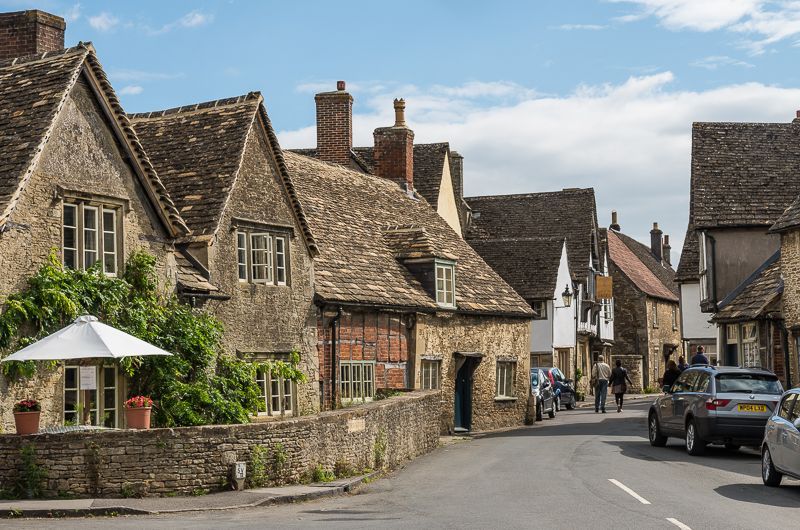
There are very few places in England that genuinely feel untouched by time — Lacock is one of them. Its timber-framed cottages, cobbled lanes and ancient abbey sit in the rolling Wiltshire countryside just a short drive from Bath, yet the village feels like a world entirely apart. No satellite dishes. No modern shop fronts. No overhead cables cluttering the skyline. Just 800 years of quiet, extraordinary history waiting to be explored.
Whether you are a lover of heritage, a devotee of period drama, a Harry Potter enthusiast, or simply someone who appreciates the rare beauty of a truly unspoiled English village, a visit to Lacock will stay with you long after you leave.
A Village with 800 Years of History
Lacock’s story begins with the Saxons, who settled beside the Bide Brook — a small stream that still runs through the heart of the village today. The name Lacock itself derives from the Saxon word lacuc, meaning “little stream.” By 1086, the settlement was significant enough to feature in the Domesday Book, and by the 13th century the founding of Lacock Abbey had transformed it into a thriving medieval community.
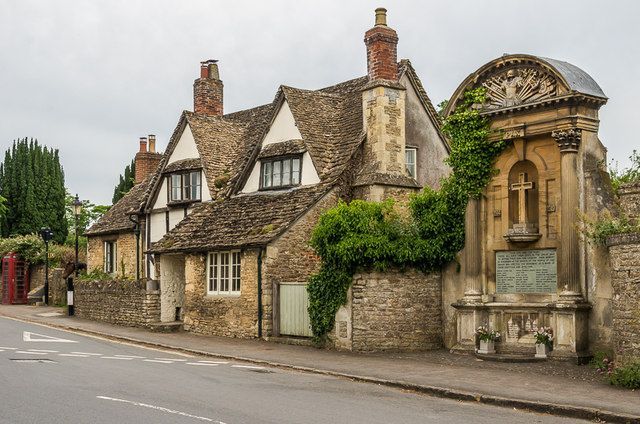
The village flourished as a centre for the wool trade throughout the Middle Ages, and its wealth is still visible today in the beautiful architecture that lines every street. Most of the surviving buildings date from the 14th to 18th centuries, giving Lacock an architectural richness that is almost unmatched in rural England. In 1944, the entire estate — abbey, village and all — was gifted to the National Trust, ensuring it has remained protected ever since.
Lacock Abbey - Eight centuries of stories
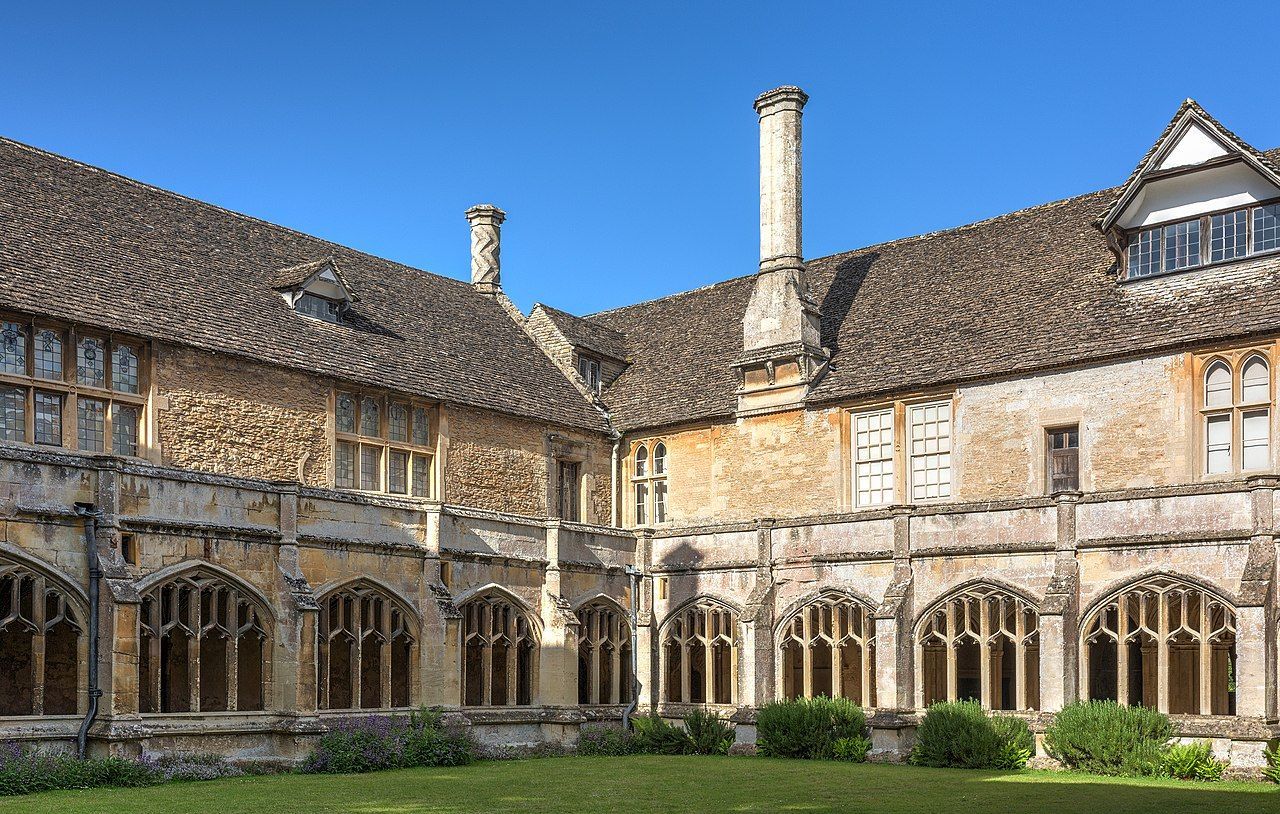
At the heart of the village sits Lacock Abbey, founded in 1232 by Ela, Countess of Salisbury — a remarkable woman who served as the only female Sheriff of Wiltshire and became the Abbey’s first Abbess. Built as an Augustinian nunnery, it survived the Dissolution of the Monasteries in the 16th century when it passed into private hands and was gradually converted into a country house.
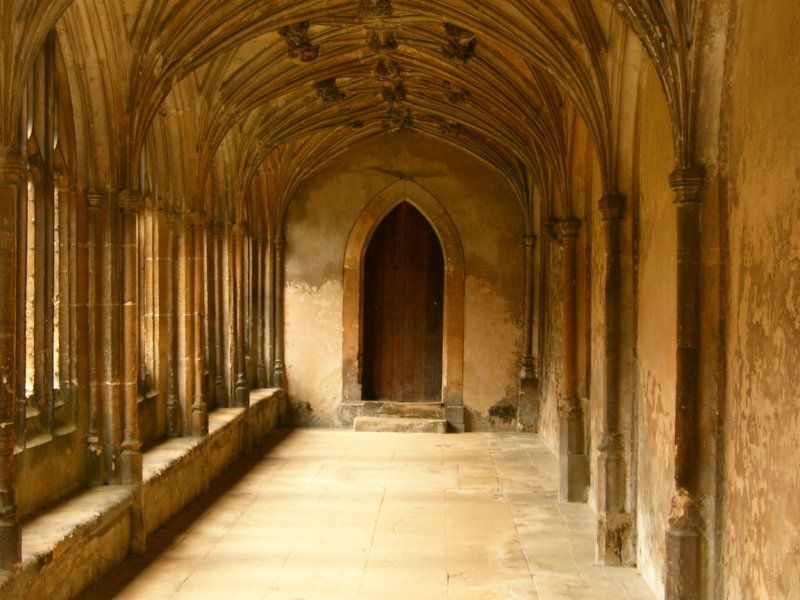
What makes Lacock Abbey so extraordinary is what survived that transformation. Its medieval cloisters, chapter house, sacristy and monastic rooms all remain largely intact, giving visitors a rare and tangible sense of its 800-year past. The house itself layers Gothic, Tudor and later architectural styles in a way that feels organic rather than contrived. It is unlike anywhere else in England.
Fox Talbot Museum - Birthplace of photography
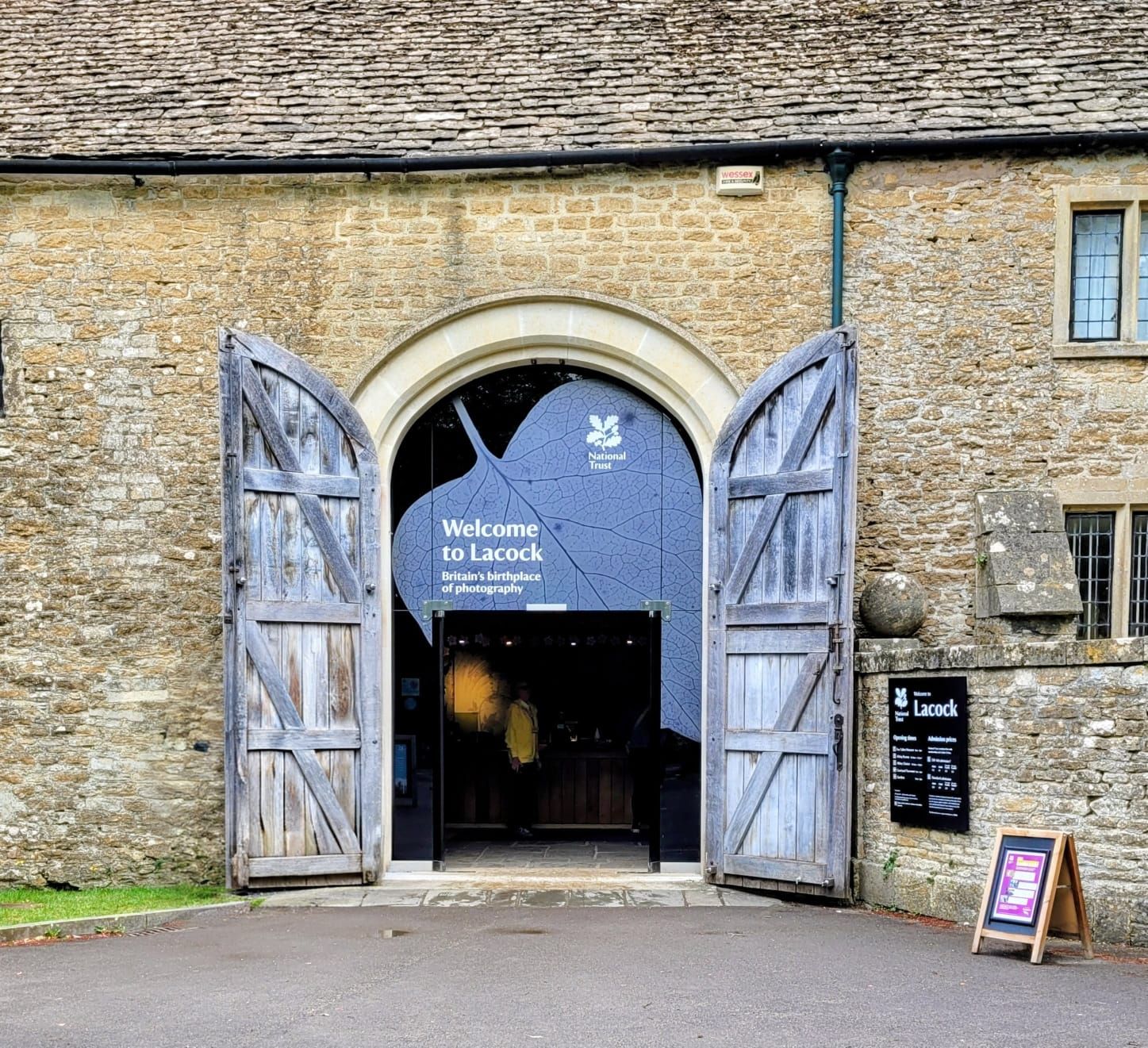
Few visitors realise that Lacock Abbey is also the site of one of the most significant scientific discoveries of the 19th century. William Henry Fox Talbot, who lived at the Abbey from 1800 to 1877, created the earliest surviving photographic negative here in 1835 — a small image of one of the Abbey’s oriel windows. That single image changed the world.
Fox Talbot’s invention of the positive-negative process laid the foundations for all photography that followed. The Fox Talbot Museum, located at the entrance to the Abbey grounds, tells this remarkable story and houses a fascinating collection of early photographic objects and original prints. It is a quietly extraordinary place, and one that surprises almost everyone who visits.
Lights, Camera, Lacock ... A Star on Screen
Lacock has appeared on screen so many times that it is almost easier to list what has not been filmed here. The reason is simple: because the National Trust owns and cares for the village, it remains entirely free of the modern visual clutter — cables, signage, aerials — that would betray any period production. A production crew can arrive, dress the streets, and transport an audience back centuries, all within a genuinely authentic medieval setting.
Among its most celebrated appearances are the BBC’s Pride and Prejudice (1995), in which the village became the town of Meryton where the Bennet sisters shopped, gossiped and hoped to catch the eye of a certain Mr Wickham. Cranford (2007), starring Dame Judi Dench and Dame Eileen Atkins, made extensive use of the village streets. Downton Abbey transformed Church Street into a 1920s livestock market — complete with sheep, pigs and a one-tonne longhorn bull — and later returned for the Downton Abbey film, in which the village hosted a spectacular royal parade with over 350 extras and 80 soldiers on horseback. Wolf Hall, based on Hilary Mantel’s prize-winning novels, used the Abbey as the seat of the Seymour family, and Beauty and the Beast (2017) also filmed scenes here.
Harry Potter & Lacock Abbey
For millions of visitors, Lacock is most powerfully associated with the world of Harry Potter. The Abbey’s medieval cloisters and atmospheric interior rooms appeared in several films in the series, standing in most memorably for the corridors and classrooms of Hogwarts School of Witchcraft and Wizardry. Fans can recognise the settings for Professor Snape’s Potions classroom, Professor Quirrell’s classroom, and Professor McGonagall’s classroom, all brought to life within the ancient stone walls.
Outside the Abbey, Church Street holds its own magic: the house at the end of the street was used as the home of Harry’s parents, glimpsed in the Philosopher’s Stone during the heartbreaking flashback in which Hagrid explains to Harry how his parents were killed. For many visitors — particularly younger ones — walking those streets is an experience that borders on pilgrimage.
Where to Eat in Lacock
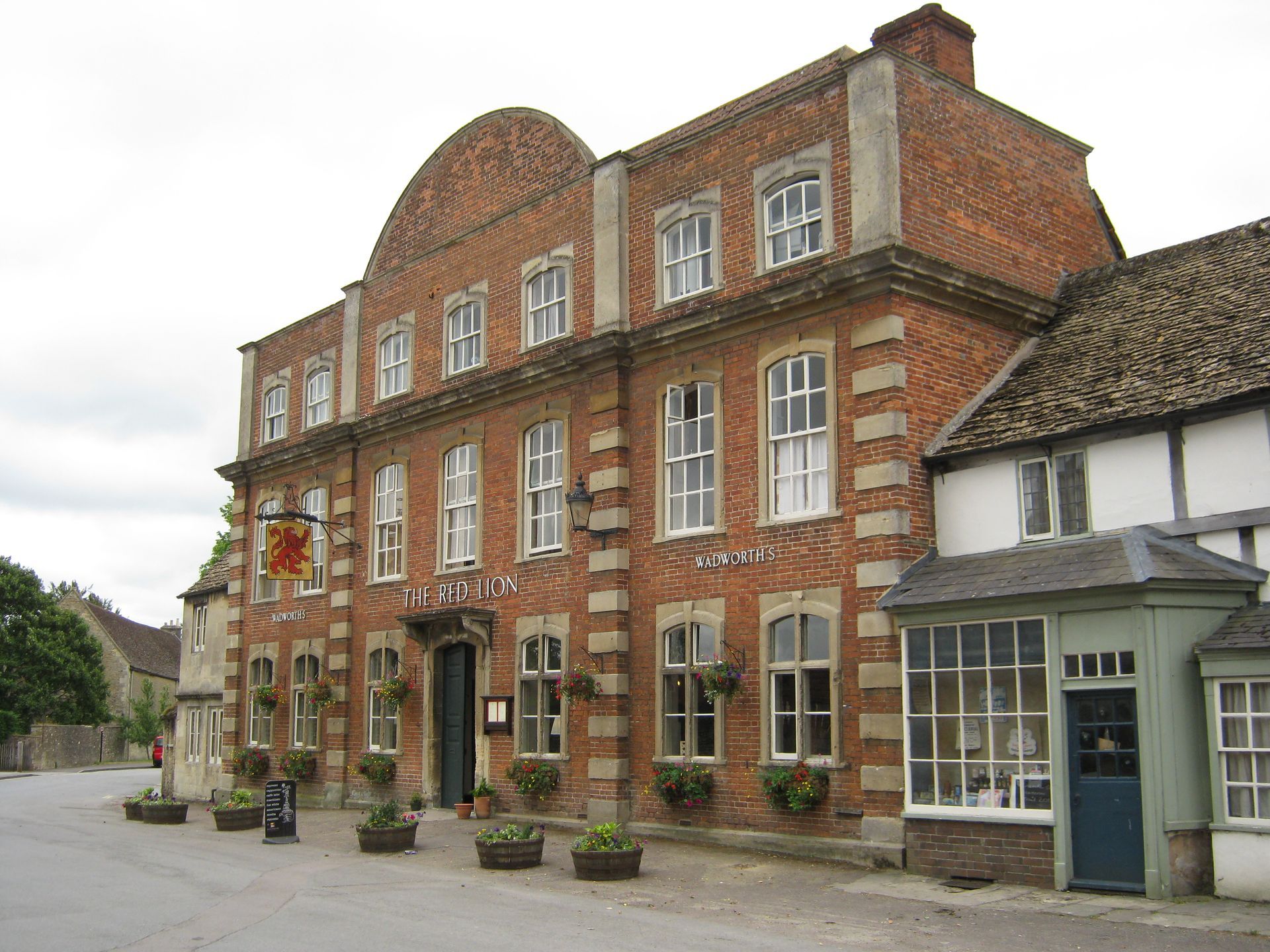
Our first recommendation is The Red Lion, a historic Georgian coaching inn set in the heart of the village, with over 200 years of history, a crackling open fireplace, candlelit tables and traditional flagstone floors. It is a proper, welcoming pub in the very best sense. The kitchen champions quality seasonal ingredients sourced from trusted local suppliers across the South West, with hearty pub classics, daily specials and options for vegetarian, vegan and gluten-free diners. The large garden has a heated canopy, making it a great spot for al fresco dining whatever the weather. For a relaxed lunch after a morning tour, it is hard to beat.
For something even older, The George Inn is a remarkable place in its own right. Dating back to around 1361, it is steeped in history and character — inside you will find original exposed beams, a grand medieval fireplace, and cosy nooks and crannies to settle into, alongside a spacious paddock beer garden and stone courtyard complete with a wishing well. The fireplace even retains its original roasting spit with a dog wheel — specially bred dogs called Turnspits would revolve the wheel to keep a joint turning over the fire, a practice that only died out when mechanical spit turners were invented. It is the kind of detail that brings history genuinely to life, and makes a stop here feel like part of the experience rather than simply a lunch break.
Either way, you will eat and drink well — in surroundings that are anything but ordinary.
YOUR TOUR, YOUR WAY
Explore Our Lacock Tours
All our tours are fully private and led by expert heritage guides who know this landscape inside and out.
Lacock, Avebury & the Wiltshire Heritage Tour — Combine the medieval magic of Lacock with the prehistoric wonder of Avebury in one unforgettable day.