Crop Circles Near Avebury: What July Videos Reveal

Awe and Mystery in the Fields of Ancient Wiltshire
Crop circles near Avebury have a way of exploding across social media every July. One moment your feed is full of summer travel photos, and the next you are watching drone videos of vast patterns pressed into golden wheat, with Avebury’s stones or Silbury Hill on the horizon. For many people in the United States and Canada, those clips are the first hint that this quiet corner of Wiltshire is anything but ordinary.
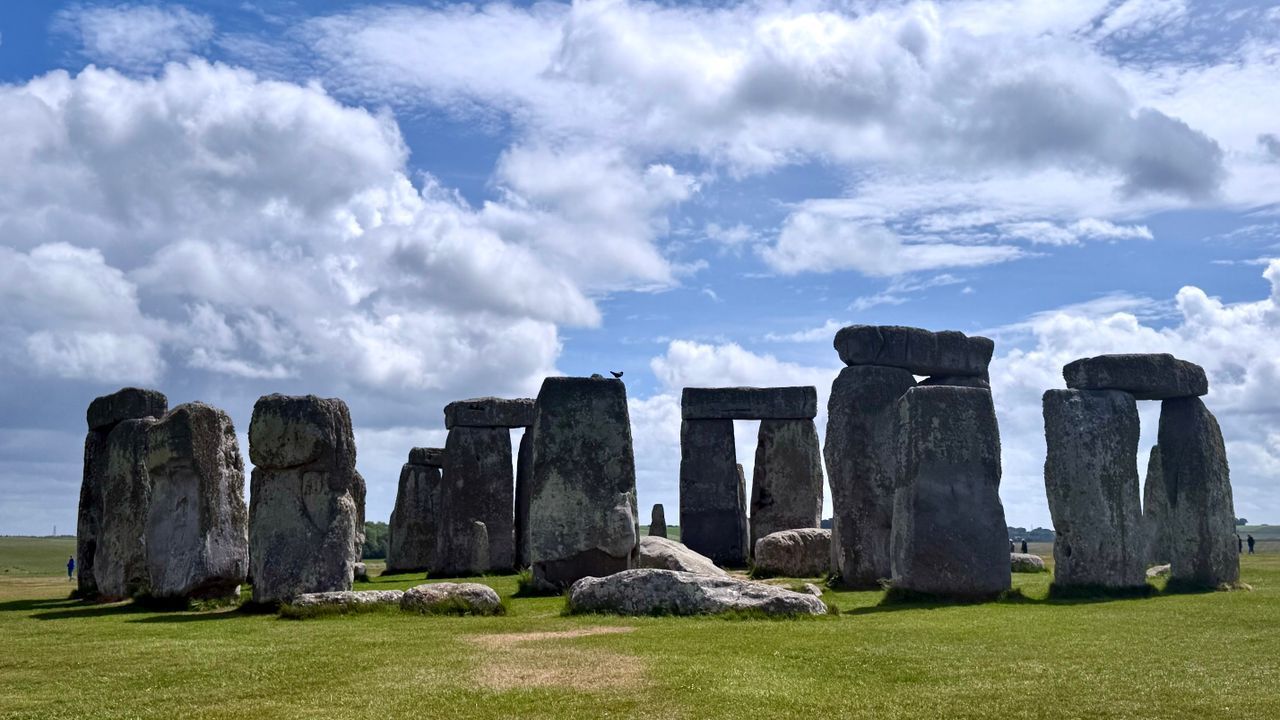
Avebury sits in one of the most concentrated prehistoric landscapes in Europe. Within a short drive you have the immense Avebury stone circle, the enigmatic mound of Silbury Hill, and the ancient burial chamber of West Kennet Long Barrow, along with dozens of lesser-known barrows and earthworks. When a new formation appears in the surrounding fields, it feels like the modern world is sketching symbols on a very old canvas, which is why crop circles so often come up on our Ancient Britain tours.
Visitors from North America tend to be drawn to this mix of mystery, spirituality, and deep time. Some are interested in sacred sites and earth energies, others in archaeology and early Britain, and many simply want a day that feels different from standard city sightseeing. Avebury offers an atmospheric counterpart, or companion, to Stonehenge, and the crop circle stories are often what spark that curiosity in the first place.
July Crop Circle Reports Near Avebury Explained
By mid-summer, friends send links, news outlets share aerial footage, and travelers start asking us if the latest crop circle near Avebury is real and whether they can see it. A typical July might bring social media posts from walkers on the Ridgeway, drone clips panning across barley fields, or a brief phone video filmed from the side of the A4. The excitement builds quickly, but not every clip shows a new or even genuine formation.
People who study crop circles, along with local photographers and farmers, play a key role in sorting solid reports from old or edited content. A more careful look often reveals that some viral videos were filmed in a different county or years ago, or show a pattern that was already harvested. When we are guiding in the area, we rely on current local information rather than online buzz, and we still treat every report with a healthy dose of common sense.
There is also a very real human side that often gets lost in the online conversation. These are working fields, feeding livestock and people, and not open playgrounds. Farmers tend to feel a mix of curiosity, pride, and frustration. A few points are worth keeping in mind if you are hoping to view a formation:
- Fields are private property, even if they sit beside a public footpath.
- Many farmers cut out formations quickly to protect their crop and reduce trespass.
- Any open access is usually clearly indicated, sometimes with an honesty box for donations.
- Walking through standing crops without permission causes damage, which means lost income.
For anyone on our tours who is interested in crop circles, we always stress respectful viewing, which usually means sticking to agreed paths or viewing from nearby rights of way, rather than marching into the field for the perfect selfie.
Understanding Crop Circles in the Heart of Ancient Britain
Crop circles in southern England have a tangled history. Early press reports stirred up excitement, then well-known hoaxers admitted to creating some of the first formations with boards and rope. Since then, a whole culture has grown up around the circles. Some teams treat them as large-scale land art, others as spiritual symbols, and others as elaborate puzzles to decode.
On tour, we often hear the full spectrum of theories. We keep the tone open and friendly, and acknowledge that people come with different beliefs. The ideas that come up most often include:
- Human made designs created at night with careful planning and laser levels.
- Patterns inspired by sacred geometry, astronomy, or ancient symbols.
- More speculative suggestions about energies, earth spirits, or visitors from elsewhere.
- The thought that mystery itself is the point, inviting people to think differently about the land.
What nearly everyone agrees on is that there is a strong connection between the circles and ancient sites. Fields near Avebury, Silbury Hill, and along the Marlborough Downs have seen plenty of formations. Whether you see that as coincidence, clever marketing, or something more, it shapes the conversations we have on Ancient Britain tours. Standing inside Avebury’s stones, looking out toward the rippling fields, it is natural to talk about why humans keep returning to these same ridges and river valleys to mark meaning in the landscape.
Visiting Avebury’s Stones When Crop Circles Go Viral
When July videos start circulating, we quickly hear from travelers who want to time their visit to catch a fresh formation. It is possible, but it helps to plan with realistic expectations and a focus on the wider experience, not just one field.
A typical private day from London or Bath that includes Avebury might weave together:
- A walk through Avebury stone circle and village, with time to touch the stones.
- A stop near Silbury Hill to talk about how and why such a massive mound was built.
- A short walk up to West Kennet Long Barrow to step inside a Neolithic chambered tomb.
- Scenic driving through chalk downland, white horses, and small villages.
If a reputable, safely accessible crop circle has appeared nearby, we may be able to add a detour to a good viewing point, depending on the farmer’s stance and current access. What we avoid is promising something we cannot control. Formations can appear overnight and be cut out just as fast. Weather, crops, and landowner decisions all play a part.
Staying safe and respectful is a big part of how we work. With an experienced driver-guide, you gain:
- Up-to-date local knowledge about which fields, if any, are welcoming visitors.
- Safe parking spots off narrow country lanes.
- Guidance on where it is legal to walk, and where it is not.
- Honest advice if a formation is too trampled or distant to be worth the time.
This way, your day centers on the enduring highlights of ancient Wiltshire, while still leaving room for any genuine crop circle viewing that makes sense in the moment.
How Heritage & Stone Tours Handles Crop Circle Curiosity
As a company focused on private, experience-led day tours across Wiltshire, Bath, the Cotswolds, and parts of Wales, we meet crop circle curiosity every season. We see it as a starting point for richer conversations rather than a gimmick to build a whole day around. Our guides draw on years of exploring these routes to link the latest reports with a deeper story about prehistoric Britain, from stone circles and burial mounds to Roman roads and medieval churches.
Because our tours are private, we can adjust the balance of the day based on your interests. For some families, that might mean:
- Extra time at Avebury stone circle, including quiet corners away from the main path.
- A stop at a viewing hill to scan the surrounding fields for recent patterns.
- More focus on long barrows, hillforts, and lesser-known sites that echo the same themes.
- Or almost no attention to crop circles at all, if your priority is Roman Bath or Cotswold villages.
Avebury also combines naturally with Stonehenge, giving you two very different ancient sites on the same day. From our base area we regularly link Wiltshire with Bath and the Cotswolds, and, when needed, we can include private transportation to or from Scotland as part of a longer itinerary. The constant thread is history and landscape: crop circles may appear as a seasonal flourish, but the stones, hills, and valleys are what truly anchor an Ancient Britain tour.
Turn Curiosity Into a Journey Through Ancient Landscapes
Those July videos are often only a narrow slice of what this part of Britain feels like in person. Online you see the pattern from above, but not the breeze through the barley, the sound of rooks over Silbury Hill, or the height of Avebury’s stones when you stand right beside them. Whether any fresh circles are visible during your visit or not, the wider ancient landscape that inspires them is always there, waiting beyond the camera frame.
For travelers from the United States and Canada, a private tour offers comfort and context: small-group space, clear communication, and a driver-guide who knows the back roads, parking spots, and current situation in the fields. It also takes the pressure off chasing rumors. Instead of racing from one reported formation to another, you can enjoy a thoughtful day that might combine Avebury with Stonehenge or Bath, adjusting details as local news and your own interests suggest.
Step Into Britain’s Ancient Past With a Curated Tour
Let us handle the planning so you can focus on the wonder of standing where prehistoric people once gathered, worshipped, and lived. Explore our carefully designed
Ancient Britain tours to find the itinerary that fits your curiosity and schedule. At Heritage & Stone Tours, we keep our groups small so you have time to ask questions and truly absorb each site. If you are ready to start arranging your visit or have questions about custom options, please
contact us.
In This Article
Plan Your Day Trip
Tell us what interests you and we'll design the perfect itinerary for your group.
Share
More from the Journal