Silbury Hill in Wiltshire: Secrets of a Neolithic Giant
Silbury Hill in Wiltshire’s Ancient Landscape
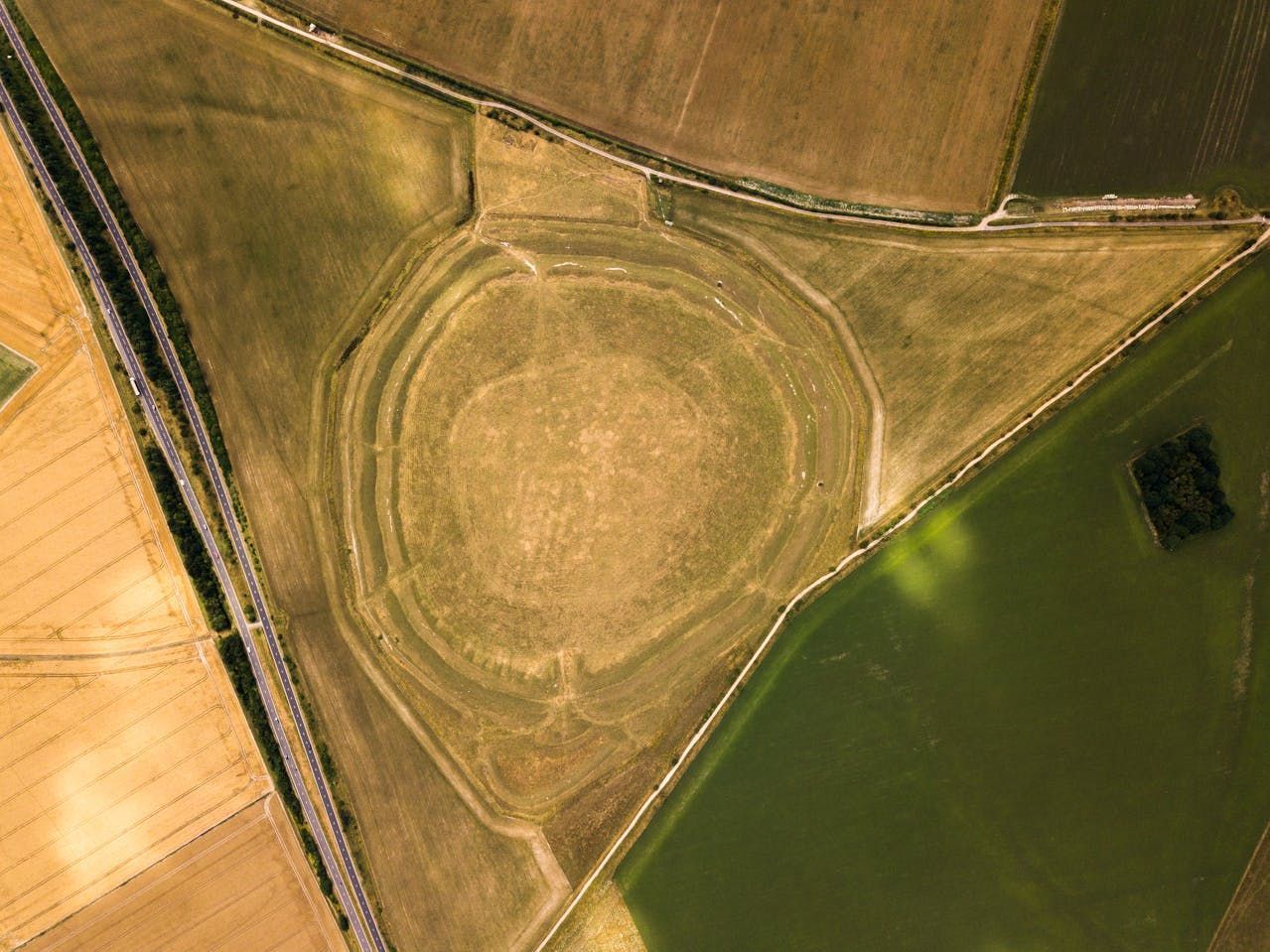
Silbury Hill rises from the Wiltshire countryside with a quiet, almost unsettling presence. As you approach along the road near Avebury and the River Kennet, the grass-covered mound fills your view, higher and steeper than it appears in photos. It looks natural at first, but the smooth, symmetrical shape quickly gives it away as something made by human hands.
Nestled in the heart of ancient Wiltshire, Silbury Hill is a mysterious prehistoric mound that continues to captivate visitors exploring ancient Wiltshire. Built over 4,500 years ago, Silbury Hill is the largest man-made chalk mound in Europe, part of a wider sacred landscape that includes the Avebury stone circle and other Neolithic sites in the UK travelers dream of seeing. For anyone interested in prehistoric Britain, ancient monuments England, or stone circle tours, it is a powerful highlight that helps tie the whole area together. With Heritage & Stone Tours, visitors can include Silbury Hill on private, fully guided Wiltshire tours with flexible pickups from London and nearby cities, especially convenient for guests traveling from North America.
Silbury Hill and the World of Prehistoric Britain
To understand why Silbury Hill matters, it helps to place it in the world that created it. During the Neolithic period, people in Britain were shifting from a life of hunting and gathering to farming and settled communities. With that change came a new focus on shared meeting places, rituals, and long-term projects that shaped entire areas of countryside.
Silbury Hill sits at the heart of one of the most important sacred landscapes Wiltshire has to offer. Within a short distance, you find several key Avebury attractions that often feature together on ancient Britain tours:
Avebury stone circle, one of the largest stone rings in the world
West Kennet Long Barrow, an impressive communal burial mound
The Avebury avenue of standing stones
Other mounds, springs, and ancient trackways
Why Silbury Hill was built is still debated. Archaeologists and historians have suggested several possibilities:
- A ritual focus for ceremonies linked to the seasons
- A marker of territory or identity for local communities
- A symbol of power, unity, or shared belief
- A place aligned with sightlines to nearby monuments, rivers, and the sky
Whatever the exact purpose, visiting Silbury Hill helps many travelers see prehistoric Britain as active and sophisticated, rather than primitive or simple. When you stand in this concentration of ancient monuments England is known for, the scale of cooperation and planning by early farmers in ancient Wiltshire becomes very real.
Building a Neolithic Colossus
Silbury Hill was not created in a single burst of effort. Archaeological investigations have shown that the mound went through several construction phases. What began as a smaller feature slowly expanded, with people adding more and more material, reshaping and enlarging it over time. Layers of chalk, soil, and gravel were carefully laid down, creating the smooth, conical form we see today.
Thinking about how this happened without metal tools or wheeled vehicles is one of the most striking parts of visiting Silbury Hill. People likely used:
- Antler picks and simple wooden or stone tools to dig
- Baskets and sledges to carry chalk and soil
- Wooden stakes and ropes to help shape the sides
- Organized work groups, perhaps linked to family or clan ties
The amount of labor involved suggests strong social organization and a shared commitment that lasted for generations. Archaeological work at Silbury Hill has uncovered construction details, traces of ancient ground surfaces beneath the mound, and clues to how the builders worked. At the same time, it has not produced clear evidence for a burial, a central chamber, or rich grave goods.
This mix of hard evidence and unanswered questions is one reason we find Silbury Hill so rewarding to discuss on historical tours England visitors join with us. Our guides explain the technical side of construction in everyday language, so guests can picture the activity and effort, not just see a hill in a field.
Myths, Legends, and Ongoing Mysteries
Silbury Hill may be a product of the Neolithic period, but stories about it have grown over centuries of local life. Folklore paints it as something far more dramatic than a ritual mound. Some legends speak of a king or knight buried inside, clad in golden armor. Others talk of a horse and rider made of solid gold hidden in the heart of the hill, or link the name Silbury to a mysterious King Sil.
These stories have a common thread: the idea that such an extraordinary feature must hold a secret treasure or a powerful figure. Yet excavations have never confirmed a grand burial chamber or a hoard of artifacts. In fact, one of the major modern issues at Silbury Hill is that early digging and later tunneling caused internal damage, leading to subsidence problems.
Today, Silbury Hill is carefully protected as one of the key archaeological sites in the UK visitors can see. You cannot climb the hill, partly for safety and partly to preserve its fragile structure. For many travelers, this sense of restriction, combined with the unanswered questions, actually increases the appeal. It feels like a quiet riddle in the landscape, and that atmosphere makes Silbury a compelling stop on stone circle tours and UK history travel itineraries focused on ancient Wiltshire.
Visiting Silbury Hill with Heritage & Stone Tours
When you visit Silbury Hill today, the experience is about seeing it in context. From viewpoints near the road and footpaths in the surrounding fields, you get a clear sense of its height and shape against the rolling countryside. You can walk along nearby paths, watch the light change over the chalk slopes, and look across to other features in the Avebury area. Most visits to Silbury Hill itself are relatively short, folded into a wider day of exploring.
On guided Wiltshire tours with us, Silbury Hill is usually combined with key Avebury attractions like:
- Avebury stone circle
- West Kennet Long Barrow
- The wider prehistoric landscape around the River Kennet
Depending on your interests, we can also create full-day cultural heritage tours that include other ancient monuments England is famous for, such as Stonehenge, or extend into historic cities and countryside like Bath, Salisbury, or the Cotswolds. For guests arriving from the US and Canada, having a private guide and driver removes the stress of rural roads and timings, and flexible pickups from London or nearby cities keep travel straightforward.
Because our tours are private, we can adjust pacing to suit how you like to travel. Some visitors want more time for walking and photography around sacred landscapes Wiltshire offers, while others prefer shorter walks and more time hearing about prehistoric Britain from the comfort of the vehicle. Either way, we use Silbury Hill as a key stop on ancient Britain tours that link several Neolithic sites in the UK travelers often have on their wish lists.
Planning Your Ancient Wiltshire Adventure
A visit to Silbury Hill and the surrounding ancient Wiltshire landscape rewards a little planning. The countryside can feel open and exposed, and conditions change quickly, so it helps to be prepared. When we talk with guests ahead of their historical tours England wide, we often suggest:
- Comfortable walking shoes or boots with good grip
- Layers of clothing, including a light waterproof jacket
- A small day bag for water and personal items
- A hat and sun protection in brighter months
Silbury Hill, Avebury, and West Kennet Long Barrow can all be enjoyed in a single day, especially as part of guided Wiltshire tours where routes and timings are carefully thought through. For travelers from North America, where vacation time is often limited, this kind of planning means you see more without feeling rushed or worrying about directions and parking in unfamiliar rural areas.
Ancient monuments England preserves around Silbury Hill offer a rare chance to stand in a landscape that was already old by the time of the Romans. With thoughtful guiding, that scenic stop becomes a deeper look into prehistoric Britain, showing how early farmers shaped land, belief, and community. For anyone curious about ancient Wiltshire, Neolithic sites across the UK, or broader cultural heritage tours, Silbury Hill is not just a hill in a field; it is a key to understanding a whole ancient world.
Bring Britain’s Ancient Landscapes To Life On Your Next Trip
Step into the stories behind stone circles, burial mounds, and sacred landscapes with our carefully crafted
ancient Britain tours. At Heritage & Stone Tours, we handle the details so you can focus on the experience, from local insights to quiet moments at world-famous sites. If you are ready to start planning,
contact us
and we will help you design a visit that fits your interests and schedule.
In This Article
Plan Your Day Trip
Tell us what interests you and we'll design the perfect itinerary for your group.
Share
More from the Journal