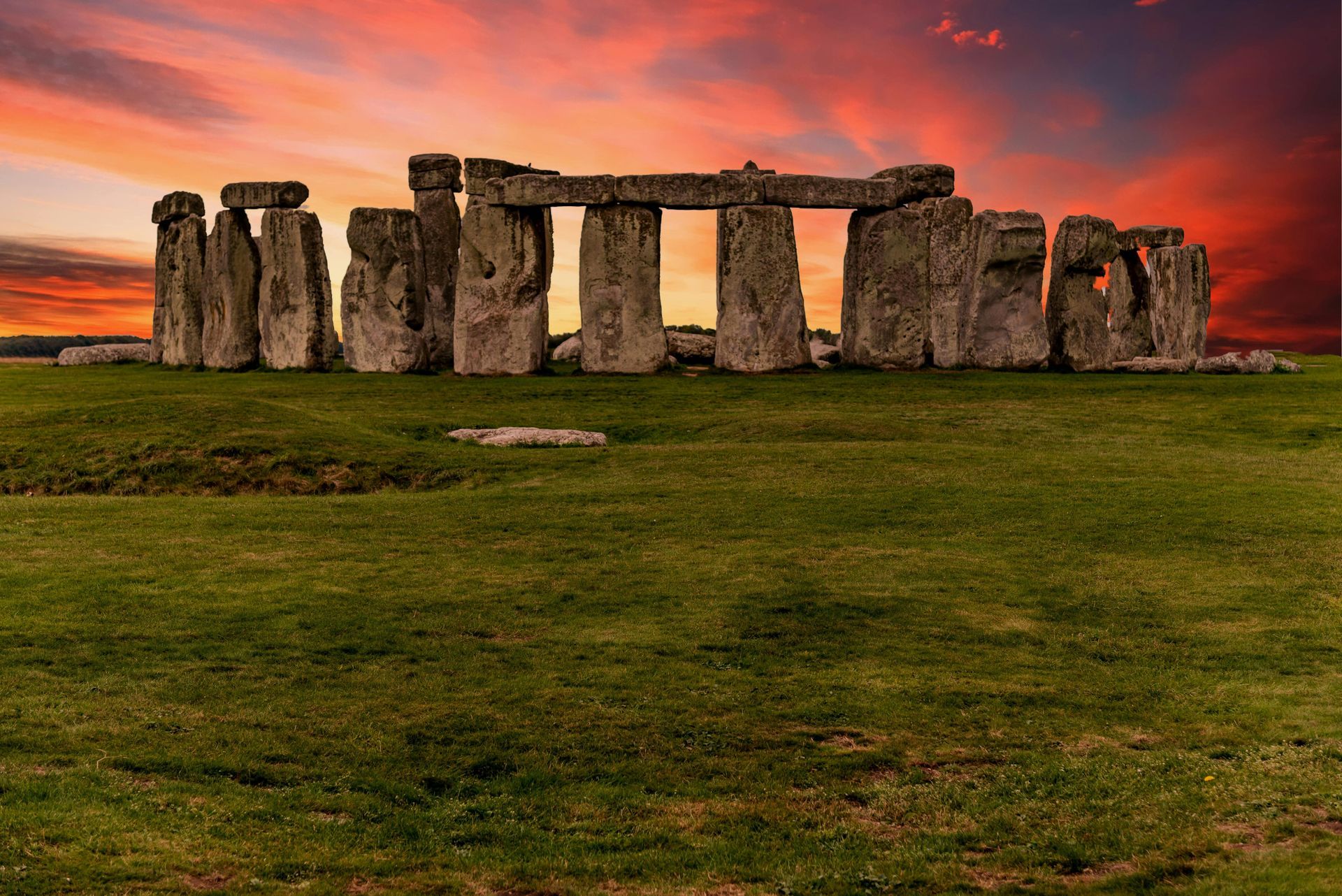
Meet Gertrude: Stonehenge's Most Unexpected Regular Visitor
Heritage & Stone Team
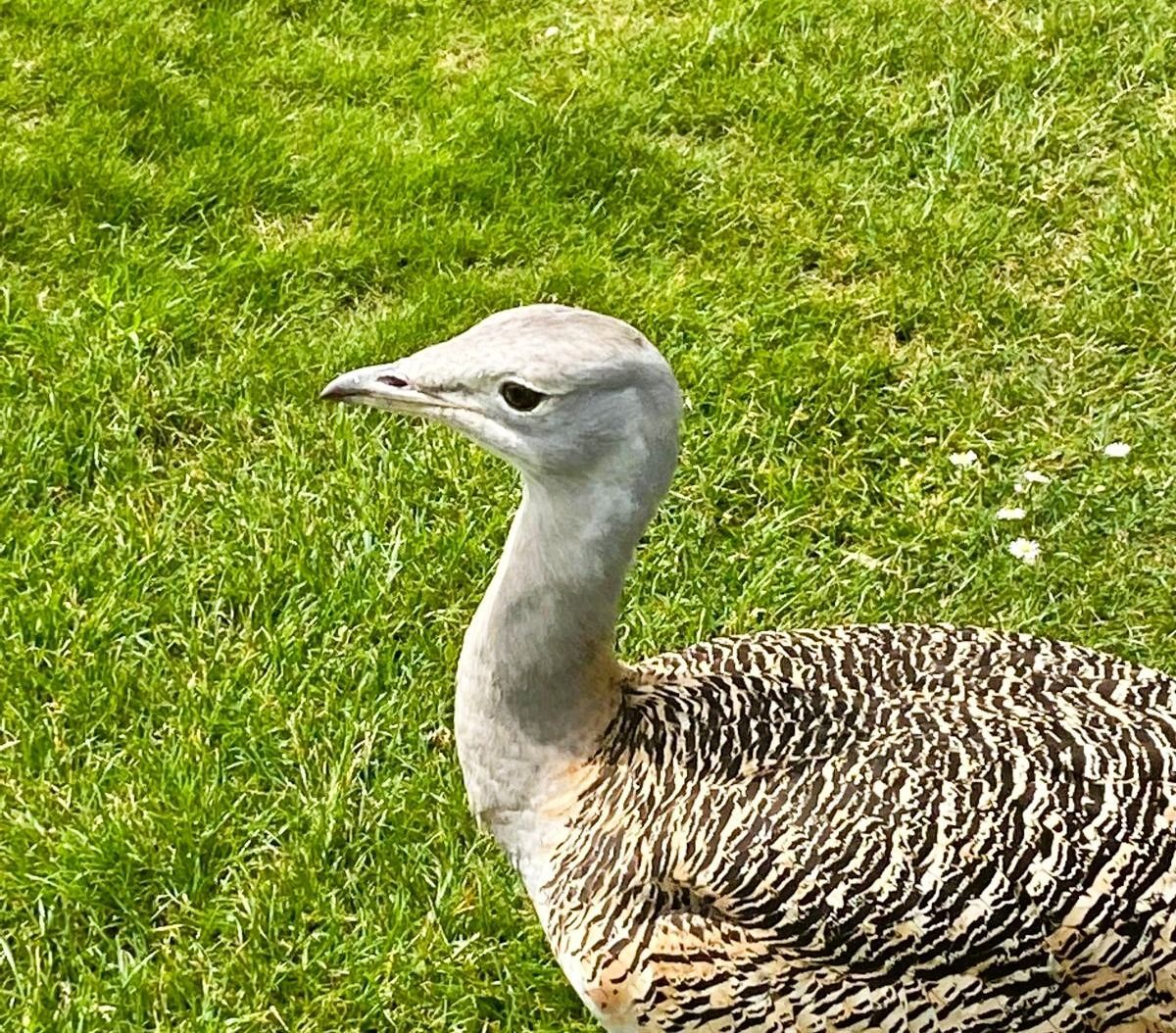
Every spring, as the chalk grasslands of Salisbury Plain begin to stir back to life and visitors arrive at Stonehenge wrapped in scarves and curiosity, something quite magical can happen. If you are very lucky — and you keep your eyes open — you might spot a large, confident bird striding across the grass with the quiet authority of someone who has always belonged there. That bird is Gertrude, and she is one of the most extraordinary regular visitors Stonehenge has.
She doesn't book a ticket. She doesn't queue. She simply arrives, as she does every April, and makes herself entirely at home.
Who Is Gertrude?
Gertrude is a Great Bustard (Otis tarda) — one of the heaviest flying birds in the world — and her story is as remarkable as the ancient stones she chooses to visit. She was hatched in 2009 from an egg rescued in Saratov Oblast, southern Russia, as part of the Great Bustard Group's egg rescue programme. Great Bustard Group Like the other chicks, she was reared with elaborate measures to prevent her becoming too attached to humans, including feeding puppets and dehumanisation suits. Despite all of this, Gertrude alone became far more drawn to human company than any other bird they had raised. Great Bustard Group
Known to the project as T5, she was released onto Salisbury Plain in 2011 BirdForum — and it wasn't long before the staff at Stonehenge gave her a rather more fitting name.
Why Does She Come to Stonehenge?
Gertrude lives with the other female Great Bustards for most of the year. But every spring, when the rest of the females fly out to the lek to watch the males display, Gertrude takes a different route entirely — she flies across to Stonehenge. She is quite clearly attracted by the crowds of people there, and during these spring weeks she is remarkably tame, happily interacting with visitors and staff. Great Bustard Group She simply wants nothing to do with the breeding season and heads off to Stonehenge each year until it is over! RSPB Later in the summer, she quietly flies back to join the rest of the flock. Great Bustard Group
Nobody quite knows what draws her back year after year. Perhaps it is the hum of voices, the open landscape, or something in the atmosphere of the place. Whatever it is, she has been returning reliably for well over a decade now, and the staff and guides here know to watch for her each April with genuine excitement.
The Great Bustard: Britain's Lost Giant
To understand why Gertrude's presence here matters so much, you need to know a little about what the Great Bustard represents for Britain.
The Great Bustard (Otis tarda) is on the Red List of endangered species of the International Union for the Conservation of Nature, with European populations in long-term decline. It has been extinct in Great Britain since the last bird was shot in 1832. These magnificent birds were once native across the open chalk downlands of England, and the Great Bustard's place in Wiltshire history is beyond doubt — it is the county's official bird and features on the Wiltshire coat of arms. A stuffed Great Bustard can be found in the county hall, and the bird appears on the badges of army cadets and Girl Guides in the region. BirdGuides
Hunting and the transformation of the British landscape into intensively farmed land drove them away for nearly two centuries. Since its formation in 1997, the Great Bustard Group has been working to change that, releasing young birds reared from rescued eggs onto Salisbury Plain, and is seemingly on the verge of establishing a self-sustaining population of wild Great Bustards in southern England. BirdGuides That population now stands at around 50–60 birds. RSPB
Giants of the Sky
For first-time visitors who spot Gertrude, the sheer size of her often comes as a shock. The huge adult male Great Bustard is among the heaviest living flying animals, and the species is arguably the most sexually dimorphic extant bird species in terms of size difference — the male being three times heavier than the female. Even Gertrude, as a female, is a genuinely impressive sight: broad-bodied, strong-legged, with a mottled plumage of copper browns and soft whites that makes her look as though she was painted to match the Wiltshire landscape.
During the spring display season, the males put on one of nature's great theatrical performances — fanning their tails over their backs and inverting their wings in what observers have nicknamed the "foam bath" display. The females select mates whose white feathers show the most ultraviolet, and the males know that displaying outside of early morning and late afternoon can damage the UV content of their feathers. RSPB Gertrude, of course, skips all of that and comes to Stonehenge instead.
A Conservation Story Worth Celebrating
Gertrude's annual appearance is more than a charming quirk — it is a symbol of what careful, patient conservation work can achieve. She shows up year after year with a quiet confidence, as if she remembers a time when this land was hers. In a way, it was.
The next time you visit Stonehenge in April or May, take a moment to scan the open grassland around the monument. You might just see her — walking at her own pace, perfectly at ease among the ancient stones and the wondering visitors, as if she has always been here.
Because in a sense, she has.
Your Tour, Your Way
Every one of these day trips can be customised. Want to combine Stonehenge with Salisbury? Add a Cotswolds village to your Bath tour? Build a completely bespoke itinerary? That's exactly what we do. With 25 years of experience and a genuine love for this part of England, we'll design a day that's perfect for you.
All our tours are private — just your group, your guide, and a comfortable air-conditioned vehicle. We collect you from your London hotel (or wherever you're staying) and handle everything from there. All you need to do is enjoy the ride.
In This Article
Plan Your Day Trip
Tell us what interests you and we'll design the perfect itinerary for your group.
Share
More from the Journal